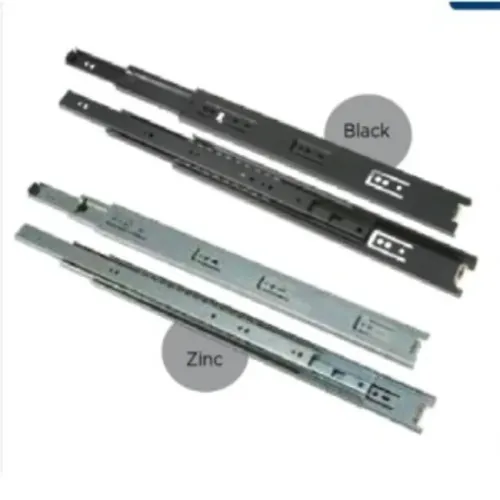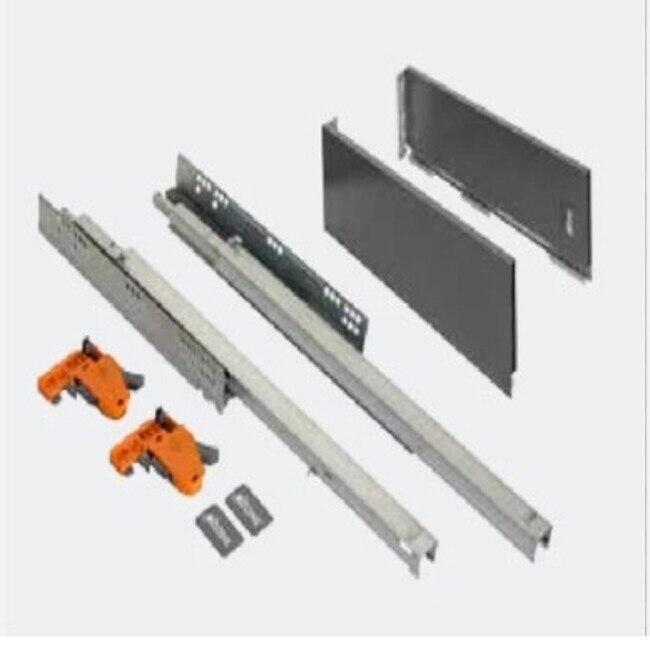
A “tandem box” quotation can describe a complete double-wall drawer system, a metal drawer box with concealed runners, or only the drawer sides and fittings. Use the finished cabinet, intended drawer load, exposure conditions and replacement requirements to define the specification before you compare suppliers or approve a sample.
Key takeaways
- Confirm the quote includes drawer boxes, runners, connectors, brackets, clips and adjustment hardware.
- Measure cabinet opening, drawer width, depth and clearances in sequence before ordering.
- Match runner load ratings and extension length to the drawer’s contents and use frequency.
- Specify coating, corrosion resistance and installation tolerances for Mumbai’s humid conditions.
Define the Tandem Box System Before Comparing Suppliers
A tandem box system is a complete drawer assembly, not merely a pair of runners. It usually combines a double-wall drawer box, concealed undermount runner, front connectors, rear brackets, locking clips, adjustment cams and cabinet fixing points. Confirm whether the supplier is quoting the complete assembly or only drawer sides and fittings.
Specify these items in the purchase order:
- Box type, drawer-side or gallery height, material, finish and nominal length
- Runner model, dynamic load rating, extension, soft-close mechanism and test basis
- Front-fixing method, rear connector, locking clips, adjustment ranges and fixing screws
- Required cabinet clearances, runner setback, cutting list and one approved physical sample
- Written bill of components, including drawer-bottom support and concealed stabilisation parts
Do not treat “450 mm” as usable internal depth. It normally identifies the nominal box or runner length; back-panel thickness, front thickness and rear clearance reduce storage space.
| Option | What it includes | Key difference |
|---|---|---|
| Tandem box system | Double-wall box, concealed runners and connectors | Integrated drawer assembly with coordinated adjustment |
| Telescopic ball-bearing slide | Separate metal slide fitted to drawer sides | Visible side hardware; box construction remains separate |
| Undermount runner | Concealed runner beneath the drawer | A runner type, not automatically a complete tandem box |
| Standard metal drawer channel | Side-mounted channel and basic brackets | Fewer integrated adjustments and less concealed hardware |
Measure the Cabinet and Drawer in the Right Sequence
Measure the finished carcass before ordering the box: cabinet internal width, usable depth, opening height and squareness determine the drawer dimensions.
1. Record the cabinet internal width between the finished inside panels, not the nominal cabinet size. Confirm the supplier’s side clearance for that box and runner, then calculate drawer-box width as internal width minus the specified clearance on both sides. Do not assume every tandem system uses the same gap.
2. Check the installation drawing for runner setback, rear clearance, front thickness and back-panel thickness. These dimensions control the box depth. A quoted 450 mm or 500 mm is normally the nominal runner length, not the usable internal depth; request the exact cutting list before approving production.
3. Select the nominal runner length that fits the measured depth after the required front and rear clearances. Never force a longer runner into a shallow carcass: the rear fixing can strike the back panel, while a shorter runner reduces usable storage and changes load performance.
4. Confirm whether the stated drawer dimensions describe the box, the front panel or the cabinet opening. Ask for the matching front connectors, rear brackets, locking clips and runner model; mixing parts from different systems can leave the drawer skewed or impossible to adjust.
5. Check the finished carcass for level, parallel sides and square corners. Obtain the permitted runner-to-runner height tolerance and adjustment range, because inadequate side or front adjustment causes rubbing, uneven reveals and soft-close failure. Wide drawers also need the manufacturer’s maximum width and any stabiliser requirement.
Match Load, Extension and Soft-Close Performance to the Drawer’s Job
Choose hardware by the drawer’s job, not by a generic “heavy duty” label. Compare dynamic load capacity—the moving load the runner is tested to carry—with the weight of the box and its contents, then confirm whether the rating includes the drawer sides. EN 15338 is a useful comparison standard for extension-element strength and durability.
| Drawer job | Load and extension choice | Opening assistance |
|---|---|---|
| Cutlery or shallow utility | Lower load class; full extension improves visibility | Soft-close drawer with standard pull-out |
| Crockery, cookware or files | Higher load class; full extension prevents lifting heavy items over the front | Soft-close with a damper rated for the loaded drawer |
| Bottles, pantry goods or waste sorting | Higher load class for concentrated or eccentric loads; specify synchronised runners or stabilisers when required | Soft-close; push-to-open only after testing the loaded drawer |
| Wide drawers | Use the manufacturer’s maximum width and support requirements, not the nominal load rating alone | Synchronised runners and stabilisation reduce racking |
Over-extension is not a substitute for full extension: specify it only when the manufacturer rates the runner and cabinet for that travel. A wide drawer can twist when one side carries bottles or a waste bin, causing binding, uneven closing and premature runner wear.
Test one approved sample fully loaded. Open and close it repeatedly, check operation from partial opening, and test again after the cabinet is levelled and fixed. An empty showroom sample proves little; temperature, drawer mass, uneven loading, cabinet squareness and runner alignment all affect soft-close performance.
Specify Coating and Installation Tolerances for Mumbai Conditions
Specify the substrate and coating system, not merely a colour. For Mumbai kitchens, choose a system suited to chloride-rich coastal air and humidity: electroplated zinc, powder coating over prepared steel, or stainless steel. Request corrosion resistance evidence using ISO 9227 neutral salt spray.
Salt-spray hours compare equivalent systems; they do not predict a drawer’s service life in a kitchen.
| System | Specify in the tender | Control the risk |
|---|---|---|
| Electroplated zinc | Base steel, plating and sealer, plus the test report | Protect drilled and cut edges; exposed steel can rust first |
| Powder coating | Steel substrate, pretreatment and powder finish | Reject chipped surfaces and confirm touch-up instructions |
| Stainless steel | Exact grade, finish and matching fasteners | Prevent galvanic contact with aluminium fronts and dissimilar screws |
Treat interfaces as part of the specification. Aluminium fronts, stainless sinks, cleaning chemicals and uncoated fasteners can trigger galvanic or chemical corrosion, while a coated drawer side does not protect a bare screw or cut component.
Require the supplier’s installation drawing and record these controls:
- Cabinet squareness limits and the permitted runner-to-runner height difference
- Side-clearance requirements, runner setback, and front and rear drilling positions
- Adjustment ranges for height, side and front alignment
- Drawer-bottom thickness and fixing details
- Approved touch-up protection for drilled holes and cut edges
Do not accept “standard tolerance” as a complete answer. Limited adjustment causes rubbing, uneven reveals and soft-close failure when a carcass is slightly out of square. Include these limits in the purchase specification and verify them against one physical sample before production.
Compare Suppliers on the Complete Bill of Components
An approved physical sample and a written bill of components make a tandem box supplier India comparison fair. A visible drawer side alone can conceal weaker runners, missing stabilisation, poor front adjustment or unsuitable fixing hardware.
Treat “tandem box” as a description, not a specification. Confirm whether the quote covers a complete double-wall box, a metal box with concealed runners, or only sides and fittings.
| Component | Record in the comparison | Risk if omitted |
|---|---|---|
| Box and side height | Material, gallery height and finish | Different capacity and appearance |
| Runner | Nominal length, dynamic load class and extension | A “heavy duty” claim without EN 15338 evidence |
| Front connection | Brackets, locking clips and adjustment cams | Misaligned fronts or unavailable adjustment |
| Rear connection | Rear brackets or connectors | Drawer movement and squareness problems |
| Cabinet fixing | Fixing points, screws and runner setback | Installation failure or inconsistent gaps |
| Support items | Bottom support, stabilisers and cover caps | Sagging, rattle or exposed hardware |
| Service parts | Runners, dampers, screws and connectors | Full drawer replacement after one part fails |
Compare the exact cutting list, not just “450 mm” or “500 mm.” Nominal length is not usable depth; back-panel thickness, front thickness and clearances reduce storage space.
Ask each supplier to demonstrate a fully loaded drawer after levelling and fixing the cabinet, including repeated and partial opening. Aruna Techno Industries can be assessed on the same evidence: sample, component schedule, replacement-part continuity, lead times and batch consistency.
Related product
 | Furniture Fittings Drawer Slides are essential hardware components designed to facilitate the smooth, controlled, and reliable movement of drawers in furniture and... View product → |
Frequently asked questions
What is included in a complete tandem box system?
A complete assembly usually includes the double-wall drawer box, concealed undermount runners, front connectors, rear brackets, locking clips, adjustment cams and cabinet fixing points. Ask the supplier to identify every included component.
How should you measure for a tandem box drawer?
Measure the cabinet opening first, then confirm the required drawer width, internal depth, runner clearance and front-panel position. Follow the runner manufacturer’s installation dimensions rather than estimating from the old drawer.
How do you choose tandem box load capacity and extension?
Select the load rating from the drawer’s full working contents, including cookware, tools or provisions. Choose extension length based on how far you need the drawer to open and whether access to the rear is important.
What should Mumbai projects specify for tandem box coating and tolerances?
Specify the coating type and corrosion-resistance evidence, then confirm the permitted cabinet, runner and drawer clearances. Humid interiors and coastal exposure make surface protection and accurate installation particularly important.
How should you compare tandem box suppliers?
Compare the complete bill of components, load rating, extension, soft-close mechanism, adjustment range, coating, installation dimensions, replacement parts and warranty terms—not only the price of the drawer sides.