A 35 mm label is not enough to select a soft-close hinge: overlay, cup drilling, door construction, load and mounting plate all determine whether the finished door aligns and closes correctly. By the end, you will know what to specify, what to test on a sample, and what to ask a Mumbai supplier before placing a production order.
Key takeaways
- Measure overlay, half-overlay or inset geometry before comparing hinges.
- Match hinge type to panel thickness, mounting plate and opening angle.
- Calculate door load and hinge quantity before placing a bulk order.
- Test the hinge on your actual door, cabinet and screw pattern.
Specify the Door Geometry Before You Compare Hinges
Measure the door against the cabinet opening before selecting a soft-close hinge. Identify whether the door covers the cabinet side, shares a partition with another door, or sits inside the opening. That decision determines the overlay arrangement; a sample that fits one geometry proves nothing about another.
| Door position | Hinge choice | What to verify |
|---|---|---|
| Full overlay | full overlay hinge | Door covers the cabinet side; measure the required side reveal and confirm the mounting-plate height |
| Shared partition | half overlay hinge | Two doors share one cabinet side; confirm the central gap and each door’s coverage |
| Inside opening | inset hinge | Door sits within the cabinet; measure the opening clearance on all four sides |
For the common 35 mm concealed hinge cup diameter, specify cup-hole diameter, drilling depth, cup setback from the door edge and drilling angle. Measure the setback from the door edge to the hole centre, then confirm that the cup will sit flat without breaking through a thin panel.
Excessive depth weakens or punctures the door; an incorrect setback changes the overlay.
Give the supplier the door thickness, height, width, material and target reveals. Ask the quotation to state arm or crank, cup depth, mounting-plate height, cabinet-side drilling dimensions, fixing method and opening angle. Require a drilling template or machine-setting drawing, not just a catalogue photograph.
A wrong plate can create the same reveal error across an entire batch.
Match the Hinge to the Panel, Mounting Method and Opening Angle
Choose the hinge by door thickness and material, then match its fixing method to production needs. MDF and particleboard need reliable screw retention, the correct system screws and pilot holes; a generic wood screw can loosen even when the hinge passes cycle testing.
Plywood and solid timber give stronger fixing, but dense timber still needs pre-drilling to prevent splitting.
| Material | Suitable construction and fixing | Adjustment and opening-angle checks |
|---|---|---|
| MDF or particleboard | Clip-on soft-close hinge or screw-on hinge with specified system screws, pilot-hole size and minimum thickness | Use height, side and depth adjustment; test damper force because pull-out or a warped panel can cause hard closing |
| Plywood | Clip-on or slide-on hinge with a compatible mounting plate; confirm screw bite through the veneer and plies | Set overlay and depth accurately, then verify the required opening angle without edge collisions |
| Solid timber | Screw-on hinge for controlled fixing, or clip-on hardware where the plate suits the cabinet | Pre-drill near edges; select the angle from door clearance, not from the damper specification |
| Glass | Purpose-built clamp or adaptor hinge matched to glass thickness and edge clearances | Do not drill tempered glass on site; check clamp pressure, reveals and the specified angle |
| Aluminium-frame door | Hinge and mounting plate designed for the exact frame profile | Confirm frame clearance, plate compatibility and three-dimensional adjustment before ordering |
Clip-on systems speed removal but require matching plates. Slide-on systems add a fitting step, while a screw-on hinge tolerates small production variation at the cost of slower assembly and visible fasteners. Test the chosen damper, final pull-in, noise and adjustment range on the actual panel before bulk purchase.
Confirm Load Capacity, Hinge Quantity and Alignment Control
Do not choose hinge quantity from door height alone: match the finished door’s width, height, thickness, material and mass to the supplier’s tested range. Confirm whether the stated soft-close hinge load capacity applies per hinge or to a complete set.
A light damper can stall on a wide, heavy door; an overpowered damper can make a light door crawl or stop short.
- Measure the finished door, including glass or applied panels, and use the manufacturer’s load chart to select the quantity. Space hinges according to its layout: keep the upper and lower hinges near the ends, then distribute additional hinges evenly to control bowing and sag.
- Request the damper adjustment range or deactivation option. Do not increase damper strength to overcome a door that binds; check the overlay, mounting-plate position, cup seating, panel flatness and screw grip first.
- Specify three-dimensional adjustment: vertical movement at the plate, sideways overlay correction and depth adjustment for the reveal. A hinge that lacks depth control cannot reliably correct a door sitting proud or recessed.
- Choose the opening angle only after checking adjacent doors, handles, walls and internal fittings.
| Option | Practical use | Risk if incorrectly specified |
|---|---|---|
| 95 degree hinge | Tight layouts or nearby obstructions | The door may not clear the cabinet |
| 110 degree hinge | General access to most cabinet interiors | It can strike an adjoining panel |
| 165 degree hinge | Wide access or corner applications | The door can collide with a wall or adjacent unit |
Test the complete hinge-and-plate combination on the actual door. Excessive closing force indicates an alignment problem before it indicates insufficient damper strength.
What to Ask a Mumbai Supplier Before You Order
Do not approve a hinge quotation until it identifies the exact hinge revision and matching mounting plate. A soft close hinges supplier in Mumbai should also confirm service to your site, minimum order, GST and freight treatment, hinge stock availability, dispatch date, and replacement procedure.
| Compare | Ask for | Warning sign |
|---|---|---|
| Stock and specification | Cup diameter and depth, overlay or inset, arm/crank, plate height, opening angle, fixing method, clip-on or screw-on mounting, and frameless or face-frame compatibility | “35 mm soft-close hinge” with no drilling or plate details |
| Performance evidence | Tested door width, height, mass, material and thickness; damper range; hinge quantity and vertical spacing | Nominal cycle count without load, dimensions, angle, mounting method or failure criterion |
| Durability | Exposed finish and separate information on spring, rivet and damper housing corrosion resistance for coastal, kitchen or commercial use | Only a decorative finish is described |
| Supply and delivery | Available quantity, exact revision, lead time, delivery method to your Mumbai or project address, and back-order policy | Stock is described as “available” without a count or dispatch date |
| Technical support | Installation drawing, drilling template, adjustment instructions, sample support and troubleshooting contact | Advice covers hinge count but not alignment or damper adjustment |
Ask whether cycle testing follows EN 15570 or an internal method; never compare bare cycle numbers across different test conditions. Aruna Techno Industries belongs on your comparison list only after it supplies these same details for the quoted model.
For a factory, contractor, carpenter or project buyer, record every answer against the purchase order. That prevents a visually similar hinge or incompatible plate from entering the same installation.
Related products
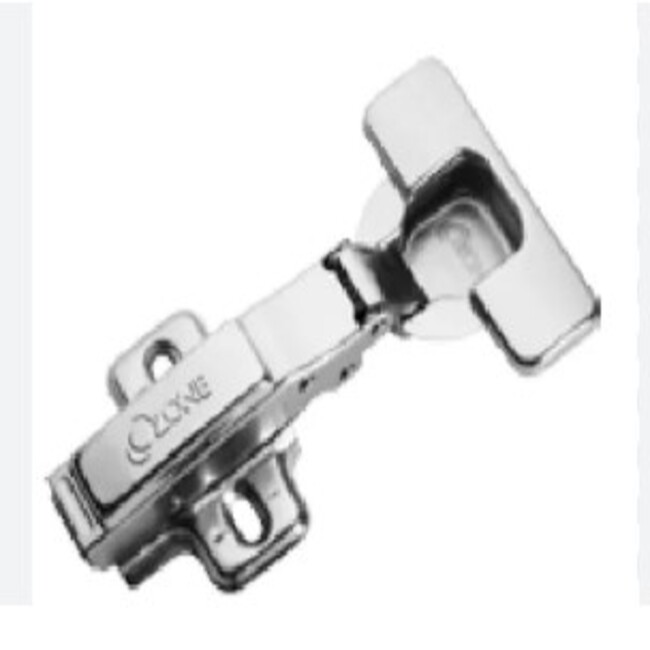 | Furniture Fittings Cabinet Soft Close Hinges are specially designed to allow cabinet doors to close smoothly and silently. View product → |
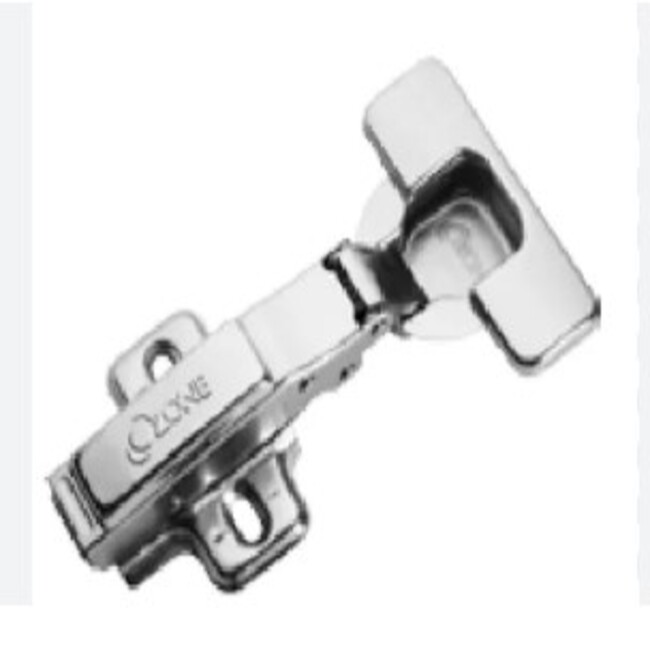 | Furniture Fittings MS Soft Close Hinges are made from mild steel and designed to provide a smooth, controlled, and noiseless closing motion. View product → |
Approve the Hinge on Your Actual Door Before Bulk Purchase
A hinge that closes a showroom door once has not passed approval. Install the quoted hinge sample and its exact mounting plate on the production door, cabinet side and screw type you will use.
1. Verify the sample against the finished geometry. Check full, half-overlay or inset position, reveals, cup setback, opening angle and the gap at adjacent doors. Record the hinge model, cup diameter, mounting-plate height and overlay result; a 35 mm cup alone does not prove compatibility.
2. Use the supplier’s hinge drilling template on the actual panel, then install the sample without altering the specified dimensions. Check screw retention in the production board, clip-on or screw-on engagement, three-dimensional adjustment, final pull-in, closing time and noise.
Operate the door repeatedly and inspect whether the plate loosens, the door sags or the damper loses control.
3. For glass doors, confirm the clamp or adaptor matches the glass thickness and edge clearances. For aluminium frames, confirm the hinge and plate are designed for that exact profile. Do not approve on-site drilling or modification of tempered glass as a workaround.
4. Request documents identifying the exact hinge and plate, finish, substrate and test conditions. Review hinge sample testing and any EN 15570 hinge testing report for the quoted model, not a similar-looking series. If corrosion matters, request an ISO 9227 salt spray report stating test method, exposure hours and acceptance condition; “rust-proof” alone proves nothing.
Approve the batch only after the installed sample meets your written checks.
Frequently asked questions
How do I specify cabinet door geometry before choosing a soft-close hinge?
Measure the door against the cabinet opening and identify whether it is full overlay, half overlay or inset. The geometry determines the hinge and mounting arrangement.
What should I match when selecting a soft-close hinge?
Match the hinge to the door panel thickness, mounting method, required opening angle and cabinet construction. Check the hinge cup, mounting plate and screw positions against the actual door.
How do I confirm the required hinge quantity and load capacity?
Check the supplier’s load guidance, then account for door height, width, weight and material. Use enough hinges to prevent sagging and confirm alignment adjustment after installation.
What should I ask a Mumbai hinge supplier before ordering?
Ask for the hinge model, compatible panel thickness, overlay range, opening angle, load guidance, mounting plate options, adjustment range, soft-close mechanism and sample availability.
Why should I approve a sample hinge before bulk purchase?
Install the sample on your actual door and cabinet to check closing speed, alignment, clearances, screw fit, opening angle and compatibility with the production panel.
Related product
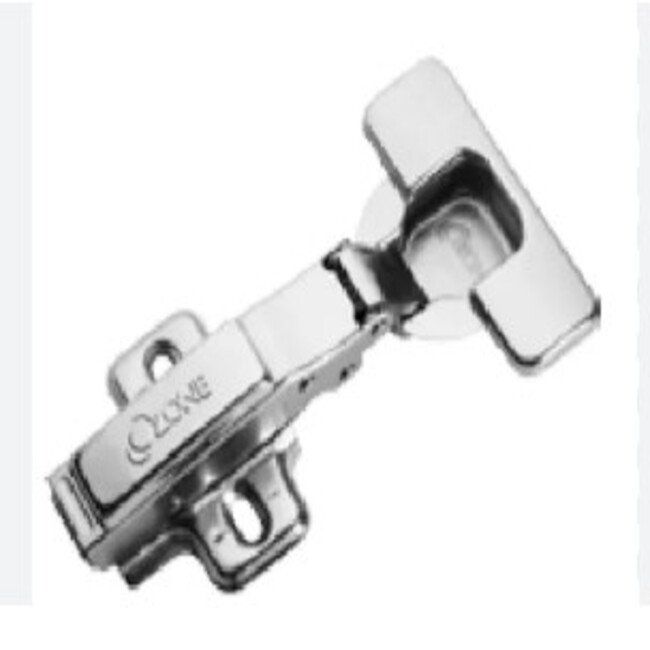 | Furniture Fittings Clip-on Soft Close Hinges are easy-to-install hinges that feature a convenient clip-on design for quick attachment and removal. View product → |