The lowest quotation is not enough if the hardware does not match the profile system, sash load, opening type or coastal conditions. By the end, you will have a practical method for comparing suppliers, checking technical compatibility, and confirming that the chosen parts can be replaced throughout the building’s service life.
Key takeaways
- Match hardware to the exact uPVC profile, sash weight and operating type.
- Identify each roller, bearing and hardware set before comparing quotations.
- Request corrosion evidence and compatibility documents for Mumbai conditions.
- Approve the order only after testing a project-specific sample.
Start with the window system, not the supplier catalogue
A quotation is only useful after you define the complete window assembly. Start with the uPVC profile system, then record each opening’s width, sash height, sash weight, glass build-up, reinforcement and operating type. A 6 mm glass pane adds about 15 kg/m² before the second pane, spacer, sealant and frame are included.
1. Identify every opening as sliding windows, casement windows, tilt-and-turn windows, fixed windows, top-hung windows or lift-and-slide windows. Do not let a supplier substitute a similar category.
2. State the sash width, sash height and calculated sash weight. Require the quoted hardware to state its allowable sash mass, maximum dimensions and permitted opening type.
3. Provide the design wind pressure and refer to IS 875 Part 3. A supplier’s standard maximum sash size does not replace project-specific wind-load verification or anchorage design.
4. Record the profile manufacturer and series, euro-groove or hardware-groove dimensions, sash overlap, backset, spindle length, handle fixing centres, hinge pattern, locking-point positions and screw locations.
5. Ask for the relevant EN 13126 part and test information for the intended duty cycle and misuse loads. Hardware for a light casement is not automatically suitable for a heavy tilt-and-turn sash or common-area opening.
6. Require a section drawing showing hinge, keep, screw and locking-point clearances. These parts must not block drainage slots or enter the drainage chamber.
7. Request installation drawings, batch identification, retained samples, lubrication guidance and a documented substitution procedure. Define replacement availability before approving a proprietary part that could become difficult to match.
Compare hardware sets and identify the exact roller or bearing
A quoted uPVC window hardware set fits only when its load rating, geometry and fixing pattern match the complete sash. Calculate the load from glass as well as profile and hardware: a 6 mm pane weighs about 15 kg/m² before a second pane, spacer, sealant and frame are added.
| Opening type | Hardware comparison | Fit evidence to request |
|---|---|---|
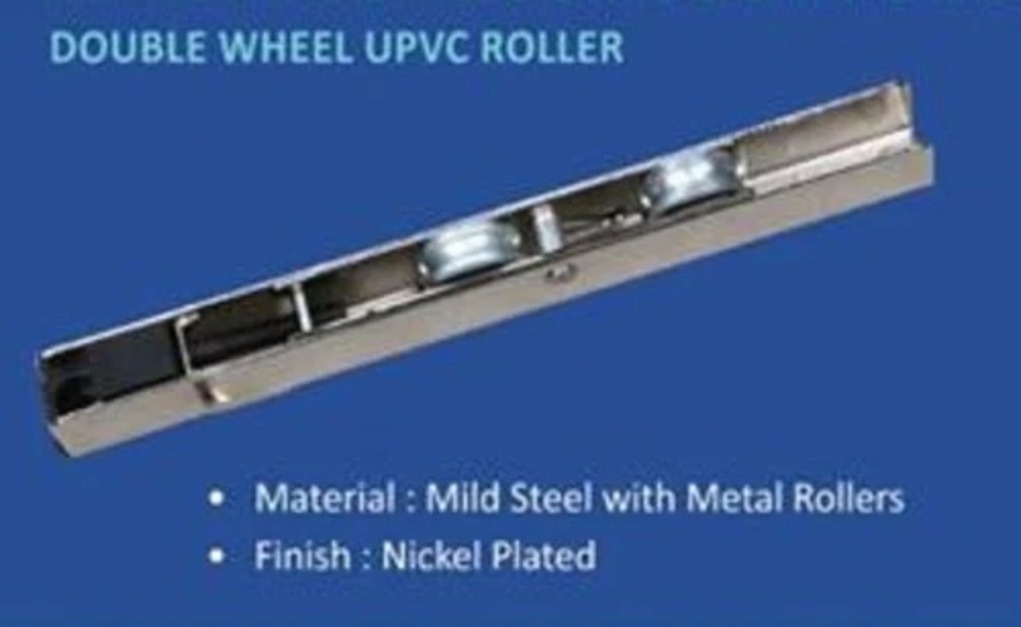
| Sliding | Rollers or bearings carry the sash on the track | Wheel material, bearing construction, load rating, adjustment range, wheel diameter, wheel width and track profile |
| Casement | Handles, locks, espagnolettes, hinges, friction stays and keep plates operate the sash | Handing, hinge load rating, espagnolette length and restrictor position |
| Tilt-and-turn | Combined handle, lock, hinge and transmission system serves two movements | Tested sash mass, height, width and intended duty cycle under the applicable EN 13126 part |
| Fixed | No operating hardware is needed | Reject a quotation that includes unnecessary moving components |
Ask for a hardware schedule, not a catalogue photograph. Check these details against the drawing and the existing part:
- opening type, sash height, sash width, complete sash mass and reinforcement position;
- left or right handing, handle spindle length, mounting-hole spacing and fixing screw locations;
- exact roller or bearing code, wheel diameter, wheel width, adjustment range and track compatibility;
- for replacement work, the original part code, espagnolette length, hinge position and keep-plate pattern.
A supplier who cannot identify these measurements is quoting a hardware family, not a confirmed fit. Test the proposed set on the actual sash before approving repeat production.
Demand documented corrosion and assembly compatibility for Mumbai
A “rust-proof” label proves little in Mumbai coastal conditions. Ask for the tested finish, substrate and EN 1670 corrosion class for each exposed and concealed part, not merely a claim of stainless steel.
| Evidence to request | What it must identify | Failure it prevents |
|---|---|---|
| Salt-spray testing report | EN 1670 class, test duration, substrate and coating; Class 5 requires 480 hours | Early rust on handles, keeps or concealed drives |
| Component schedule | Stainless steel grade 304 or 316, zinc plating specification, and finish for rollers, screws, hinges and espagnolettes | Galvanic corrosion after mixing dissimilar metals |
| Complete-window report | Tested profile, reinforcement, glazing, gaskets, hardware, dimensions and installation method | Assuming a component certificate proves air, water and wind performance |
| Profile installation drawing | Clearances around hardware, the drainage chamber and drainage slots | Leaks caused by blocked water paths |
| Seal compatibility statement | Compatibility of EPDM, TPE and PVC seals with the profile, glazing sealant and cleaning chemicals | Excessive operating force, poor compression or water leakage |
Require the supplier to state the maximum sash mass, width, height and permitted opening type. Glass weighs about 2.5 kg/m² for every millimetre of thickness, so a 6 mm pane weighs about 15 kg/m² before additional glass, spacers, sealant and frame weight.
A safe assembly depends on the whole load path, not the visible handle alone.
Test the supplier’s stock, support and replacement commitment
A supplier proves support after delivery by showing how it will identify, replace and install the same part years later. Ask a uPVC hardware supplier in Mumbai to state its stock reliability, delivery area, technical support and minimum order quantity in writing, rather than relying on a salesperson’s assurance.
- Request a hardware schedule showing exact codes, handedness, espagnolette lengths, hinge ratings and restrictor positions. A photograph or catalogue family name is not enough for repeat procurement.
- Record the batch number or lot number on retained samples, cartons and invoices. Ask how the supplier will trace an old part when the original installer is unavailable.
- Confirm replacement availability and spare parts for the building’s service life, including handles, rollers, corner transmissions, keeps, screws and gaskets. Require a documented substitution procedure if a proprietary item is discontinued.
- Obtain installation drawings, lubrication guidance and a section detail proving that replacement parts will not block drainage slots or enter the drainage chamber.
Ask Aruna Techno Industries the same questions if it is on your quotation list; the useful answer is a code, drawing, lead time and substitution record, not a general promise.
Before approval, test one support route: send a marked-up hardware schedule and request a revised set with delivery date, responsible technician and repair response time. A supplier that cannot resolve handedness or identify the correct spare before the first order will create larger site delays later.
Related products
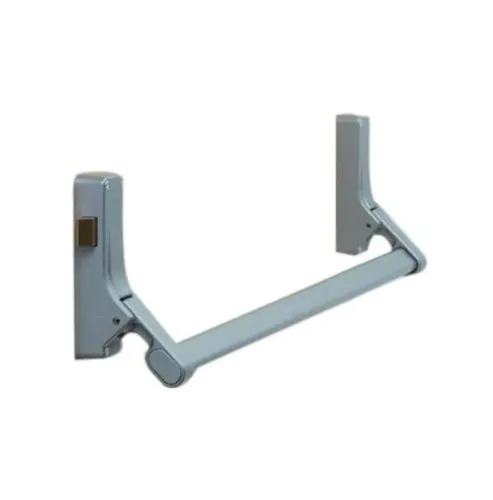
 | UPVC Window & Door Hardware UPVC Dooe Hardware View product → |
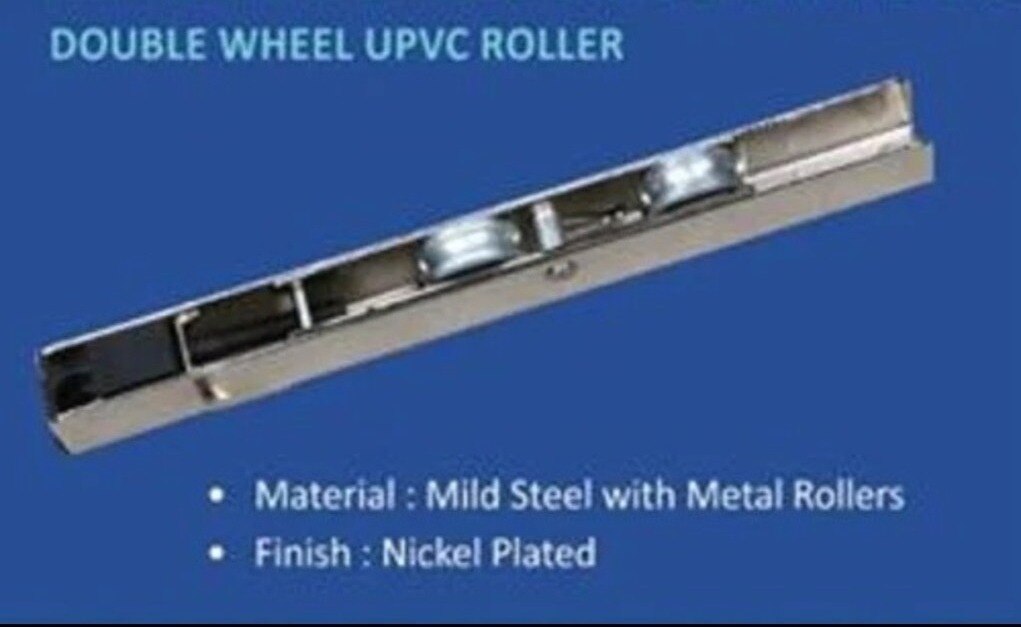
 | UPVC Window & Door Hardware UPVC Window Bearing is used for big window mainly used in balcony. View product → |
Use a project-specific sample before approving the order
Do not approve a production order from a catalogue sample. Build one acceptance sample using the actual uPVC profile, reinforcement, glazing thickness, gasket, hardware set and fixing method proposed for the flats, then inspect that complete window in the intended opening configuration.
1. Record the sash width, height, glazing build-up, complete sash mass and sash load rating. Check that the supplier states allowable sash mass, dimensions and opening type; glass alone weighs about 15 kg/m² at 6 mm thickness.
2. Operate the sample repeatedly and record handle force, smooth movement, hinge or roller adjustment, lock engagement and whether every keep closes fully. Measure gasket compression around the perimeter, because extra locking points do not correct uneven sealing.
3. Inspect fixing screws for length, spacing and firm engagement with the reinforcement. Ask for complete window assembly adjustment instructions and record the final adjustment settings installers must reproduce.
4. Request a hardware test report, but verify what it actually covers. A report for air permeability, watertightness and wind load must identify the tested complete window assembly, dimensions and configuration; a component certificate is not enough.
5. Compare the sample’s design wind pressure with the project calculation and IS 875 (Part 3). Reject a generic maximum sash size when it does not verify the project’s wind load.
6. Photograph drainage slots and record clearances around keeps, corner drives, hinge bodies and fixing screws. None should block the drainage chamber or alter the profile’s water path. Sign the acceptance record before releasing production quantities.
Frequently asked questions
What should you define before comparing uPVC window hardware suppliers?
Record the uPVC profile system, opening dimensions, sash weight, glass build-up, reinforcement and operating type for each window.
How can you compare uPVC window hardware sets accurately?
Identify the exact roller, bearing and other hardware components, then compare each set against the window’s sash weight and operating requirements.
What corrosion and compatibility documents should a Mumbai buyer request?
Ask for documented corrosion performance and confirmation that the hardware fits your specified profile, reinforcement, glass build-up and assembly.
How can you test a supplier before approving a residential order?
Check current stock, replacement support and technical assistance, then install and operate a project-specific sample before placing the full order.
Related product
 | UPVC Window & Door Hardware A uPVC window bearing is a critical component used in uPVC sliding windows to ensure smooth and effortless operation. View product → |