A multi-point lock is only as reliable as the door, frame, cylinder, keeps and installation around it. Before requesting quotations, define the door configuration, match the locking system to its use, and demand evidence that covers the assembled doorset rather than one gearbox.
Key takeaways
- Share the exact door profile, sash size, reinforcement and glazing details.
- Match the lock method to the door’s security and daily-use requirements.
- Request test evidence for security, fire performance and corrosion resistance.
- Inspect rods, keeps, gearbox alignment and installation support before accepting delivery.
Start with the Door, Not the Lock Catalogue
A supplier cannot price a usable multi-point locking system from the words “aluminium door” alone. The central gearbox, rods and keeps must match the exact profile, sash dimensions, reinforcement, drainage path and glazing arrangement; a gearbox that fits one section can foul another.
Send these quotation details:
- Finished door height, width and estimated leaf weight
- Profile or frame section system, including the manufacturer and section code
- Backset, lock-case depth, faceplate width and available installation clearance
- PZ or centre distance, spindle size and handle height
- Cylinder format, cylinder length and required thumbturn or key operation
- Number and type of locking points, such as hooks, rollers or bolts
- Left- or right-hand opening, inward or outward opening, and hinge side
- Door type, sash reinforcement, glazing bead position and frame keep arrangement
- Lock-case, rod and keep dimensions if replacing an existing mechanism
Include clear photos of the door edge, lock recess, hinges, frame rebate and keeps, plus a section drawing when available. State whether the door is new or a replacement, because machining a finished sash can add labour and weaken a narrow stile.
Require the quotation to itemise every profile adapter, keep, cylinder, handle, escutcheon, fixing, template, installation jig and replacement part. Ask whether the quoted configuration has been tested as an assembled doorset, not only as a gearbox; the frame, cylinder and hardware affect security, weather sealing and fire performance.
Match the Locking Method to the Door’s Job
Choose the locking method by the door’s job: escape, access control, weather sealing, appearance or basic occupancy security. A mechanically suitable lock can still be the wrong choice if people must escape quickly or the door needs a tested fire rating.
| Option | What it does | When it applies |
|---|---|---|
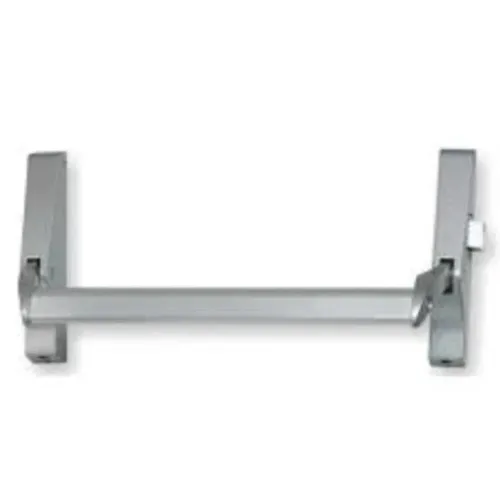
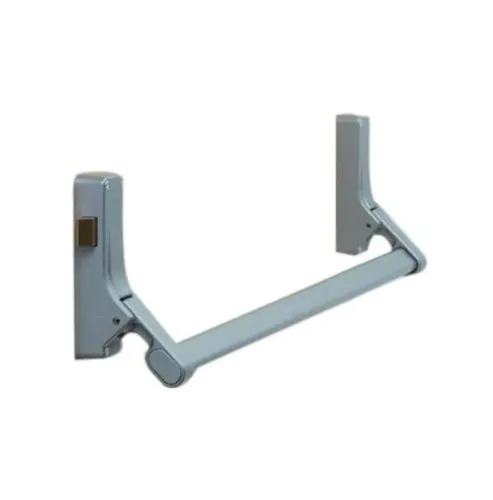
| Panic exit device | Opens with a horizontal push bar across the leaf | Use on escape routes where panic is expected, crowd pressure is possible and users may not know the hardware. Check EN 1125. |
| Mortise lock | Houses the case inside a pocket cut into the door | Choose for timber, steel or substantial aluminium doors where a concealed lock, controlled latch and neat appearance matter. Confirm the door has enough section depth. |
| Surface-mounted multipoint mechanism | Fixes the gearbox and rods on the door face rather than inside a narrow profile | Use where the leaf cannot accept a deep mortise case, including retrofit work. Check clearance, rod protection and the external appearance. |
| Patch lock | Clamps or fixes to glass with minimal edge machining | Use for frameless or framed glass doors when the glass type, thickness and patch fittings are compatible. It is not a substitute for a tested fire door lock. |
| Single-point lock | Secures the leaf at one latch or bolt position | Use on low-risk internal doors or small, stable leaves. It offers fewer restraint points than a security multi-point lock. |
For a familiar, trained user operating an emergency exit, choose a lever or push-pad device covered by EN 179 instead of a panic exit device. On fire or smoke doors, require evidence for the exact lock, cylinder, seals and door construction; substitution can void the doorset rating.
Compare Locking Points, Door Types and Operating Conditions
A five-point lock is not automatically better than a two-point lock. Compare how many points the door leaf can support, whether the frame can receive the keeps, and how reliably the system operates under seal pressure, temperature changes, dust and heavy daily use.
| System | Aluminium and uPVC | Steel and timber | Framed glass and slim partitions |
|---|---|---|---|
| Two-point lock | Suits lighter leaves and narrow profiles when top and bottom keeps align correctly; verify reinforcement and drainage clearance. | Works for moderate-duty doors where leaf stiffness and hinge control prevent bowing. | Often the practical choice for narrow stiles, patch fittings or limited frame depth. |
| Three-point lock | A useful middle option for taller external doors; confirm profile-specific rods, gearbox and keeps. | Balances security and installation effort on medium-weight leaves. | Use only when the stile and transom can conceal the centre gearbox and additional keeps. |
| Five-point lock | Helps resist sash bowing on tall, exposed doors, but adds alignment and maintenance points. | Consider it for large, heavy or security-focused leaves with reinforced fixing zones. | Usually unsuitable for slim stiles unless the complete tested system is designed for it. |
Ask for the tested sash size, leaf weight, gasket arrangement, locking-point layout and operating cycle. A cycle count means little unless the supplier states whether it tested key turns, handle operation, engagement and closing against seals.
For external doors, match the complete doorset to EN 12207 air, EN 12208 water and EN 12210 wind classifications. Confirm backset, PZ distance, faceplate, spindle, cylinder and handing; aluminium door hardware that fits one profile can foul another.
Demand Evidence for Security, Fire Safety and Corrosion
A security claim is incomplete without evidence for the assembled doorset. Request the EN 1627 test report for the door leaf, frame, hinges, cylinder, escutcheon, keeps and complete locking system; a gearbox certificate cannot prove the resistance class of a weaker frame or different cylinder.
| Standard | Request | Check before acceptance |
|---|---|---|
| EN 1627 | Complete doorset test report | Confirm the tested frame, cylinder, hinges, keeps and locking layout match your quotation. |
| EN 12209 | Classification code and full test report | Check durability, door mass, fire/smoke suitability, corrosion resistance and security classifications. |
| EN 179 | Emergency-exit device report | Confirm lever handle or push pad operation for users familiar with the exit hardware. |
| EN 1125 | Panic-exit device report | Confirm a horizontal bar for locations where panic is expected. |
| EN 12207, EN 12208 and EN 12210 | Finished-frame test evidence | Match the tested sash size, gaskets and locking points to the intended air, water and wind performance. |
- For a fire- or smoke-resisting door, require evidence covering the exact lock, cylinder, faceplate, seals and door construction. Hardware substitution can invalidate the doorset’s rating.
- Ask what the cycle test operated: key, handle, locking points and door closing under seal pressure. Record the EN 12209 class, door mass, configuration and failure criterion.
- For Mumbai or other coastal exposure, document salt air, humidity, rain, cleaning chemicals, metal grade, coating and maintenance interval. Request the EN 12209 corrosion classification and, where offered, an ISO 9227 neutral salt-spray report stating test duration.
Audit the Delivered System and Mumbai Installation Support
A cheaper quotation often excludes keeps, cylinders or profile-specific adapters, then recovers the difference during fabrication. Compare a complete delivered system: lock case and rods, keeps, cylinder, handles, escutcheons, fixings, adapters, machining templates, installation jigs, commissioning and replacement parts.
Ask each supplier to provide:
- Permissible sash dimensions, adjustment range, compression settings and the procedure for correcting sash drop, tight keeps, gasket compression or inadequate reinforcement.
- A Mumbai installation plan naming the trained installer, site visits, response time, drainage checks and the alignment test before handover.
- Commissioning records covering profile and sash dimensions, hardware batch, cylinder type, screw specification, keep positions, final operating force, drainage condition and handover photographs.
- Corrosion evidence for visible hardware, concealed springs, rods, keeps and fixings separately. EN 1670 grades 4 and 5 indicate 240-hour and 480-hour neutral salt-spray resistance; ISO 9227 results compare laboratory resistance, not guaranteed service life in Mumbai’s marine air.
- The cylinder’s EN 1303 classification, cylinder length and guard support. Excessive cylinder projection can undermine an otherwise strong gearbox.
| Supplier comparison | What to verify | Risk reduced |
|---|---|---|
| Complete kit | Every component and replacement parts are itemised | Installation overruns and future downtime |
| Local support | Named Mumbai installer, jig and adjustment procedure | Misalignment and disputed warranty |
| Corrosion specification | EN 1670 grade plus ISO 9227 report for each material | Coastal corrosion surprises |
| Records and service | Signed commissioning records and parts lead time | Slow diagnosis and difficult repairs |
Aruna Techno Industries should be assessed on this same evidence, not catalogue breadth or unit price.
Related products
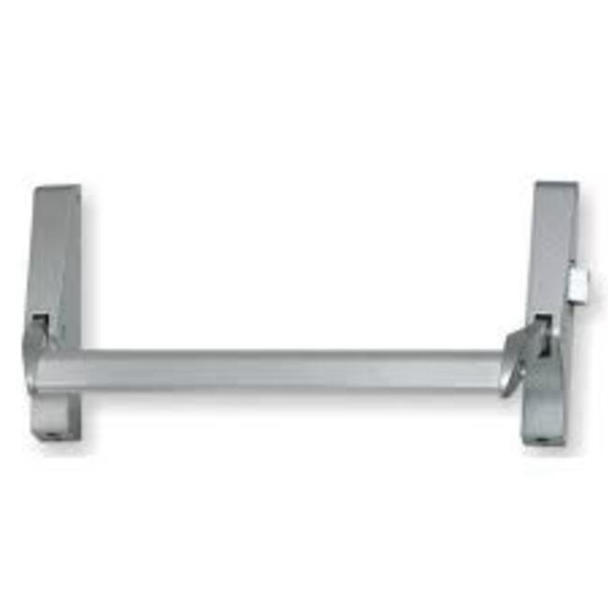 | Panic Exit Device A 3 Point Locking Panic Bar is a high-performance emergency exit device designed to deliver both superior security and effortless operation in... View product → |
 | Aluminium Slim Partition Profile Mortise handles and locks are premium door hardware components designed for enhanced security and style. View product → |
Frequently asked questions
What information does a supplier need to select a multi-point lock?
Provide the door material and profile, sash dimensions, reinforcement details, glazing arrangement, drainage path and operating direction. These details determine whether the gearbox, rods and keeps will fit without fouling the frame.
How do you match a multi-point locking method to a door?
Start with the door’s job, traffic level and security requirement. Compare manual lift-and-turn systems, key-operated systems and motorised options against the door type, user effort, access control and emergency-release needs.
What evidence should you request for a multi-point locking system?
Ask for identified test reports or certificates covering security performance, fire-door suitability when relevant, and corrosion resistance. Check that the documents name the tested lock configuration rather than a different product.
What should you inspect when the locking system is delivered?
Check the gearbox, rods, keeps, cylinders, fixings and installation instructions against the approved specification. Test alignment, smooth operation, full engagement at every locking point and clearance from glazing, drainage channels and seals.
Related product
 | Aluminium Slim Partition Profile Aluminium Partition Profile Supplier In Mumbai Partition profiles are specially designed framing systems that provide structural support and an elegant finish for interior partitions, helping to... View product → |