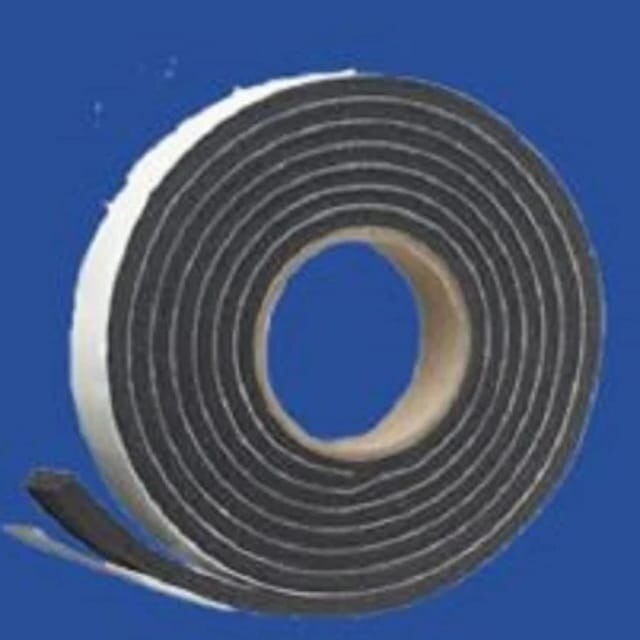
A roll labelled VHB can help position glass and create a controlled bond line, but it is not automatically a structural glazing system. You will be able to separate temporary fixing from load-bearing bonding, specify the correct tape and substrates, prevent common site failures, and compare Mumbai suppliers and prices using like-for-like details.
Key takeaways
- Treat VHB tape as a positioning aid unless the design approves it structurally.
- Match tape grade to the substrate, bond area, loads and exposure.
- Clean, dry and compress both surfaces before applying the tape.
- Compare Mumbai prices using roll length, width, thickness, grade and verification.
What role is VHB tape actually playing in the glazing joint?
VHB tape in a glazing joint is usually a positioning and handling aid, not the structure. Acrylic foam tape creates a controlled bond line, holds the glass during assembly and gives initial handling strength; the specified structural silicone or other approved sealant then provides the primary structural and weather-sealing function.
Do not treat ordinary VHB tape as a substitute for a tested structural glazing system, structural silicone sealant or engineered attachment. Tape must not carry glass dead load, wind suction, impact, long-term facade movement or unsupported cantilever forces unless engineers and the manufacturer approve the exact grade, substrates, dimensions and assembly.
Check the joint’s actual role:
- Temporary positioning: holds a panel until the permanent attachment is installed.
- Initial handling strength: prevents movement during transport or curing.
- Weather-sealing aid: helps close a designed interface but is not automatically an external weather seal.
- Load-bearing bond: requires a tested, engineered system—not a generic roll sold as structural glazing VHB tape.
A decorative glass-to-glass fixing has different consequences from a facade panel whose failure could injure people. VHB tape for glass is not a sufficient specification by itself.
A low-priced unidentified grey or black tape may look identical to VHB yet have different shear strength, peel resistance, temperature limits and ageing performance. Verify the manufacturer, exact grade, technical data sheet, batch details and approved use before relying on it.
How do you select the tape grade for glass, aluminium or ACP?
Specify the exact 3M VHB grade or named manufacturer grade before asking for a quote. State thickness, width, roll length, liner type, colour, intended application and temperature range; “VHB tape for glass” is incomplete, and structural glazing VHB tape is not automatically suitable for a load-bearing facade.
| Substrate pair | Adhesion issue | Required decision |
|---|---|---|
| Bare glass to aluminium | Surface energy and finish control adhesion | Test the actual glass and aluminium finish |
| Low-e glass or ceramic frit to aluminium | Coating or frit changes the bond interface | Trial production edges, frit and coatings |
| Anodised aluminium to glass | Anodising chemistry and surface condition matter | Confirm grade data and test |
| Powder-coated aluminium to glass | Weak coating adhesion can fail below the tape | Test coating adhesion; consider primer only if specified |
| ACP to glass or aluminium | Textured or low-energy faces reduce contact | Run a production-surface trial |
| uPVC or painted metal to glass | Low-energy plastic, paint and silicone contamination resist bonding | Obtain manufacturer guidance and test |
Prepare every trial consistently:
- Remove dust, oil, release agents and loose contamination.
- Clean with a compatible solvent such as isopropyl alcohol and water when permitted.
- Let both surfaces dry fully, then check for condensation.
- Confirm from the tape manufacturer’s data whether the actual substrate and grade require primer.
Primer is not a cure for a dirty or damp surface. Test production glass edges, frit, coatings and the selected aluminium finish instead of trusting a generic sample.
What installation sequence prevents early bond failure?
Prevent early bond failure by controlling the bond line, surface condition and dwell time in sequence.
1. Dry-fit the panels and confirm the designed bond-line geometry before removing any liner. Check alignment, corner details, clearances and the planned perimeter.
2. Apply continuous strips with no gaps at corners or along the designed perimeter. Keep joins away from critical corners where possible, and do not stretch the tape while laying it.
3. Remove the liner without touching or contaminating the adhesive. Dust, fingerprints and release agents can create weak spots that remain hidden after assembly.
4. Confirm that both substrates and the tape are above the exact grade’s minimum application temperature and free of condensation. Mumbai’s warm air does not compensate for moisture, dust or release agents.
5. Bring the surfaces together in the planned position, then apply firm, even pressure with a suitable roller. Initial tack is not final strength, whether the material is structural glazing VHB tape or VHB tape for glass.
6. Keep panels supported and undisturbed during the required dwell period. Use the commonly cited 3M development curve as a planning guide: about 50% strength after 20 minutes, 90% after 24 hours and 100% after 72 hours; confirm the exact grade’s data sheet.
7. Record installation temperature, cleaning method, primer use and tape batch information. This evidence helps trace failures and verify that the installation followed the specified process.
How do you check bond area, load and exposure before approving the detail?
Approve the proposed strip only after confirming that its continuous contact area matches the actual design load. Calculate bonded area as panel dimensions or bonded perimeter length multiplied by the tape’s continuous contact width; do not size it from the roll width alone.
For preliminary static sizing, a widely used rule is about 4 square inches of tape area per pound of load. Compare that result with glass dead load, wind pressure or suction, impact, thermal movement and safety factors. This rule is not facade approval: the manufacturer’s engineering method and the project’s approved design govern.
| Loading mode | Tape behaviour | Design consequence |
|---|---|---|
| Shear or tension across the bonded area | Most favourable | Distribute load across continuous area |
| Edge peel or prying | Much more severe | Increase control or use an engineered attachment |
| Impact or unsupported cantilever | Highly demanding | Do not rely on nominal tape area alone |
A narrow edge strip or interrupted perimeter can fail despite an apparently adequate area. Specify bond-line thickness, spacers and panel tolerances so the tape compresses uniformly rather than bridging a gap.
Protect structural glazing VHB tape from ultraviolet light, chemicals and temperature cycling. Seal cut ends and butt joints where the detail requires it; a tape joint alone is not an external weather seal.
Where can you buy verified VHB tape in Mumbai, and how should you compare price?
A request for VHB tape for glass alone is incomplete. Ask a VHB tape supplier in Mumbai to quote the exact grade, thickness, width, liner, colour, roll length, quantity, substrate pair and minimum application temperature, plus the intended function:
- Temporary fixing
- Decorative bonding
- Weather-sealing aid
- Structurally engineered assembly
Aruna Techno Industries can handle a specification-led hardware and sealing-solution enquiry in Mumbai, but request the same substrate-specific confirmation and documents from any supplier.
Compare VHB tape price in Mumbai only after separating the quote properly.
| Item | What to check | Why it matters |
|---|---|---|
| Roll price | Exact grade, width, thickness and length | Different rolls are not equivalent |
| Extra charges | GST, slitting, freight and delivery | A low quote may exclude these costs |
| Running cost | Total delivered price ÷ running metres | Shows the cost of installed length |
| Bonded-area cost | Total delivered price ÷ square metres of actual contact area | Wider tape can cost more per bonded area |
Before accepting stock, inspect the manufacturer’s label, grade designation, batch or lot number, technical data sheet and packaging. Reject unmarked, damaged, partially unwrapped or contaminated rolls, or run an adhesion test before use.
Keep accepted rolls in original packaging in a clean, dry place at moderate room temperature, away from dust, moisture, sunlight and crushing. Old or poorly stored tape deserves testing before installation.
Related product
 | Aluminium Window & Door Hardware Vhb tap is used for structural glazing, ACP fixing. View product → |
Frequently asked questions
What role does VHB tape play in a structural glazing joint?
VHB tape creates a controlled bond line, holds glass during assembly and provides initial handling strength. The specified structural silicone or approved sealant provides the primary structural and weather-sealing function.
How do you select VHB tape for glass, aluminium or ACP?
Check the tape grade against the actual substrates, surface finish, bond area, loads, temperature range and exposure. Do not select tape by colour or price alone.
What installation sequence helps prevent early VHB bond failure?
Prepare clean, dry surfaces, apply the tape without stretching, align the components, apply firm pressure across the bond area and follow the product's dwell or cure requirements before loading the joint.
How should you check a glazing detail before approval?
Confirm the effective bond area, design loads, edge distances, temperature and weather exposure, substrate condition, sealant compatibility and the manufacturer's technical documentation.
How should you compare VHB tape prices in Mumbai?
Compare the exact grade, width, thickness, roll length, liner, batch traceability and supplier documentation. A lower roll price is not cheaper if it contains less usable tape or lacks verification.