A casement handle is not a universal replacement part: an espagnolette handle, cockspur handle and multipoint-lock handle connect to different mechanisms. Before you order, you will be able to identify the existing window system, record the dimensions that control compatibility, compare Mumbai-suitable materials and finishes, and check whether a supplier’s quotation covers the complete working assembly.
Key takeaways
- Identify the mechanism before choosing an espagnolette, cockspur or multipoint handle.
- Measure spindle length, backplate size, fixing centres and handle projection.
- Specify corrosion-resistant materials and finishes for Mumbai’s humid, coastal exposure.
- Compare quotations by included components, performance evidence and replacement consistency.
Identify the window mechanism before you ask for a casement handle
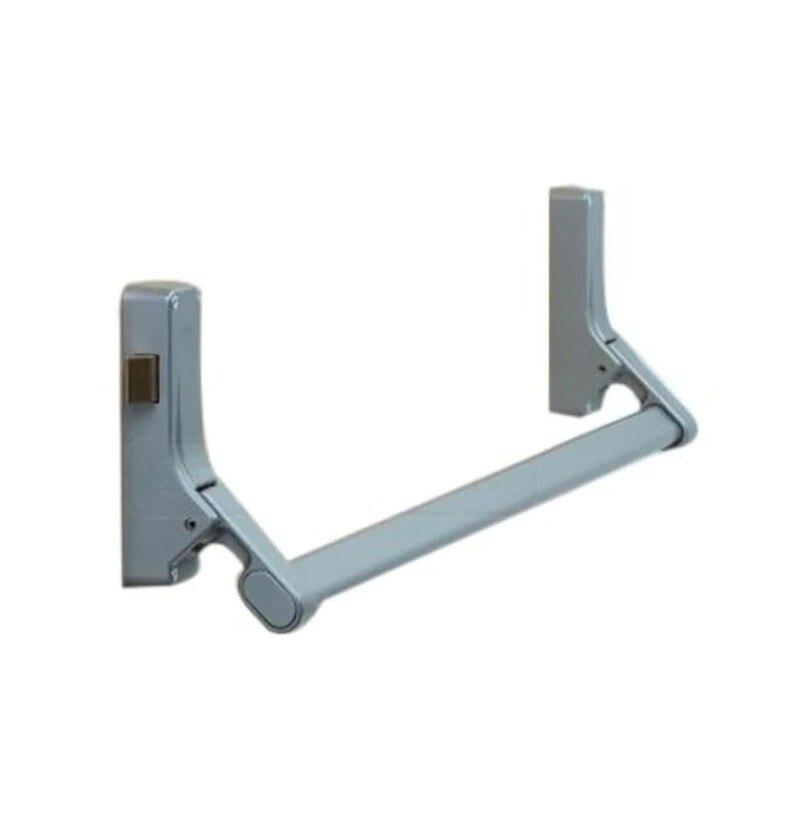
Do not order a handle until you know what it drives. An espagnolette handle turns a square spindle connected to a gearbox and locking rods; a cockspur handle hooks over a wedge-shaped keep; a multipoint lock handle operates several locking points. These mechanisms are not interchangeable because similar-looking backplates can hide different connections.
| Mechanism | How to identify it | Suitable window system |
|---|---|---|
| Espagnolette handle | Lever turns a spindle and moves cams or rods along the sash edge | uPVC and many aluminium windows with an espagnolette gearbox |
| Multipoint lock handle | Lever engages several hooks, rollers or bolts around the sash | Windows designed with a multipoint locking strip |
| Cockspur handle | Fixed nose closes over a wedge keep on the frame | Older aluminium or uPVC casements |
| Fork handle | Forked end engages a matching wedge or hook | Older casement designs using a fork-and-keep arrangement |
| Friction-stay handle | Operates the stay or latch without a full locking gearbox | Simple casements where the stay provides the opening control |
Send a casement handle supplier India the existing handle’s front and rear photographs, the aluminium profile or window-series name, and a photograph of the sash edge with the handle removed. State whether you need a non-locking handle, a key-lockable handle or a push-button model.
Record handing when the lever, key cylinder or restricted-opening button fixes its orientation; never assume an espagnolette handle is reversible.
A lockable handle alone does not prove window security. The gearbox, keeps, screws, reinforcement, frame anchorage and glazing all contribute, so confirm the complete assembled window rather than relying on the handle’s appearance.
Measure the existing handle and specify every compatibility dimension
Measure the old handle in place and photograph both sides before ordering; appearance alone cannot confirm compatibility. A handle that matches the finish can still miss the gearbox, foul the sash, or leave screws unsupported.
- Measure spindle length from the backplate underside to the tip, and record the square size. Many uPVC espagnolette handles use a 7 mm square spindle, but confirm yours.
- Measure screw-centre spacing from hole centre to hole centre. Record whether it is 43 mm screw-centre spacing or another distance.
- Record backplate dimensions: length, width, thickness, and fixing-hole positions.
- Measure the required offset from the sash face to the spindle centreline.
- Count fixing holes and specify screw diameter, length, head type, and corrosion grade. State whether the profile contains steel reinforcement.
- Record handle height, lever orientation, and the position of any key cylinder, push button, or restricted-opening button.
- Photograph the handle front, rear, spindle, fixing holes, gearbox or espagnolette connection, and the aluminium profile or window-series marking.
Spindle length affects operation, not just fit. An overlong spindle can bottom out in the gearbox and stop the handle seating; an undersized spindle can engage only partly and round off under load. Send a physical sample or gearbox drawing when dimensions are uncertain.
Specify handing for fixed-lever, keyed, push-button, or restricted-opening models. For repeat orders, retain an approved sample linked to its part number and revision, including finish, screws, spindle dimensions, and handedness.
Choose the locking function, material and finish for Mumbai exposure
A lockable casement handle suits bedrooms, ground-floor windows and offices where occupants need controlled opening. It does not establish complete window security: the spindle, gearbox, keeps, screws, sash reinforcement, frame anchorage and glazing also determine resistance.
| Setting | Handle choice | Substrate and finish |
|---|---|---|
| Home | Use a key-operated handle for child-accessible or exposed windows; choose a non-locking handle for ordinary, supervised rooms. | 304 stainless steel suits sheltered interiors; specify 316 stainless steel near the sea. Select the visible finish separately. |
| Office | Use a lockable casement handle where access control matters. A push-button handle gives quick operation without carrying a key. | Choose stainless steel for frequent use and humid rooms. Confirm that the finish covers the backplate and concealed edges. |
| Rental | A push-button handle simplifies occupant turnover; a key-operated handle gives the owner tighter control. | Use a corrosion-resistant stainless substrate with a durable satin or powder-coated finish, then keep one finish code for replacements. |
| Fire-escape window | Use a non-locking handle when locking could delay evacuation, subject to the building’s fire and egress design. | Avoid selecting plated mild steel solely because its chrome or nickel appearance matches other fittings. |
Mumbai’s chloride-bearing humidity can attack zinc die-cast parts, springs, plated steel and concealed fasteners while the face still looks sound. Stainless steel 316 resists chloride exposure better than 304, but inspect both for staining and crevice corrosion.
Specify handing when the lever, key cylinder, push button or restricted-opening feature has a fixed orientation. During inspection, confirm full handle travel, cam engagement, sash alignment, button or key operation, and key removal only in the intended locked position.
Compare supplier quotations by tested performance and supplied components
A complete quotation names the handle, spindle, screws, escutcheon or backplate, gearbox connection and any key or push-button parts. It also states performance on the assembled window, because sash compression, seal friction, alignment and keep position can increase operating torque after installation.
| Quotation type | What it includes | Evidence to request |
|---|---|---|
| Complete tested set | Handle, correct spindle, fixings, locking parts and compatible gearbox or mechanism | Tested configuration, operating torque, travel, cam engagement and EN 13126-3 classification |
| Handle-only quotation | Visible handle and perhaps a spindle; gearbox, screws and compatibility remain your responsibility | Drawing showing square size, spindle length, backplate, hole spacing and fixing-screw specification |
| Finish-only claim | Coating description with no complete assembly or window test | Substrate, pretreatment, coating system, ISO 9227 or ASTM B117 method, exposure duration and failure criterion |
Do not accept “salt-spray tested” as a service-life promise. ISO 9227 and ASTM B117 define laboratory procedures; neither predicts a specific number of outdoor years. Ask Aruna Techno Industries, or any supplier, to state whether the test covered the actual handle finish and substrate.
Check the spindle against a gearbox drawing or physical sample. An overlong spindle can bottom out; an undersized one can engage partially and round off. A key-operated handle also does not rate the whole window: security depends on the gearbox, keeps, reinforcement, screws, anchorage and glazing.
Reject a quotation that omits full travel, cam engagement, sash alignment and key removal only in the intended locked position.
Control installation, window testing and repeat-project replacements
Test the handle on the assembled window, not on a loose handle. During handle installation, verify gearbox alignment, sash compression and keep position; friction or profile tolerances can make a satisfactory handle bind or stop short of locking.
Use neutral-cure sealant around coated aluminium, plated hardware or uPVC only after checking the profile and sealant manufacturers’ compatibility data.
Use this post-fitting checklist:
- Rotate the lever through its complete travel without binding, scraping or excessive force.
- Confirm every locking cam enters its keep fully before the lever reaches its end position.
- Check that the sash sits square, seals compress evenly and the window opens without rubbing.
- Test the key cylinder or push button through repeated cycles; remove the key only in the intended locked position.
- Record the approved configuration and compare its performance with the tested configuration claimed under EN 13126-3.
For repeat projects, retain one approved sample against a fixed part number and revision. Record the finish, handing, spindle dimensions, square size, screw centres, fixing-screw type, packaging quantity and any logo or marking.
Require the supplier to match each replacement batch to that record before dispatch; a visually identical handle with a different spindle or handed gearbox can become unusable. Keep one sample from each accepted batch for future comparison, especially after a finish, mould or factory change.
A lockable handle alone is not a security rating for the window: gearbox, keeps, reinforcement, screws, anchorage and glazing also determine resistance.
Frequently asked questions
How do I identify the correct casement window mechanism?
Check what the handle drives: an espagnolette uses a square spindle connected to a gearbox and locking rods, a cockspur hooks over a wedge-shaped keep, and a multipoint handle operates several locking points.
Which dimensions should I measure before ordering a replacement handle?
Measure the spindle size and length, backplate dimensions, fixing-centre distance, handle projection, and the handle’s operating direction and position.
What should Mumbai buyers specify for casement handles?
Specify a material and finish suited to humidity, rain and salt exposure, then confirm the locking function and corrosion protection with the supplier.
How should I compare casement handle supplier quotations?
Compare compatibility, tested operating performance, material and finish, included screws and accessories, packaging, documentation and the supplier’s ability to repeat the same specification.