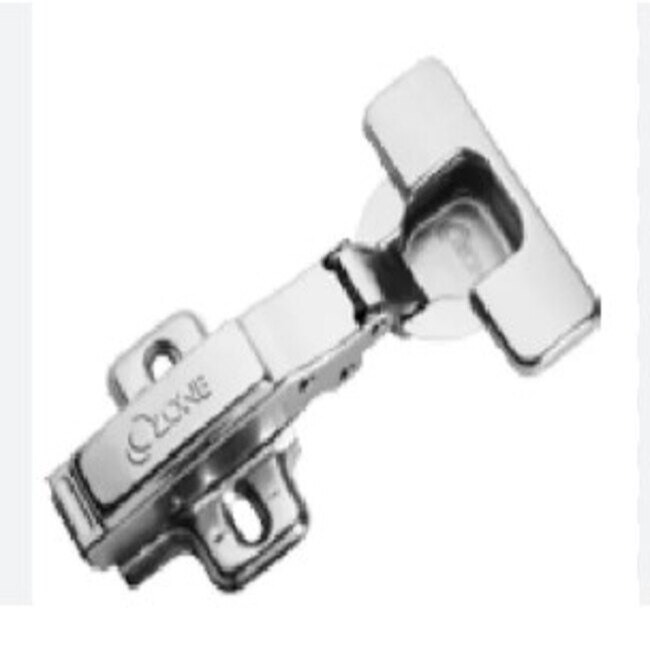
Choosing a soft-close hinge by price or model number can create misaligned doors, weak closing action and costly rework. By checking the hinge interface, door geometry, material, opening angle, load and supplier fulfilment details, you can specify a system that fits the cabinet and remains serviceable after installation.
Key takeaways
- Match overlay, cup drilling and door thickness before choosing a hinge.
- Select opening angle and movement based on shelves, corners and adjacent doors.
- Use stainless steel for corrosion exposure; choose mild steel for controlled interiors.
- Confirm samples, load data, drilling dimensions and replacement availability before ordering.
How do you match a hinge to the cabinet door and overlay?
Match the hinge to the door’s overlay condition, cup drilling and cabinet construction before comparing brands or prices.
1. Identify the overlay condition. A full overlay hinge lets the door cover nearly the entire cabinet side panel. A half overlay hinge lets two doors share one partition. An inset cabinet door hinge places the door inside the cabinet opening.
2. Specify the hinge arm and mounting plate height together. Overlay depends on this combination, not the cup alone. A quotation that names only a hinge model or 35 mm concealed hinge cup is incomplete.
3. For an ordinary concealed hinge, confirm the 35 mm cup diameter, cup depth, drilling setback from the door edge, screw-hole pattern and door thickness. Check that the material accepts the specified screws and that the cabinet side panel has enough substance for the mounting plate.
4. Treat aluminium-frame and glass doors as separate constructions. An aluminium-frame door hinge needs the specified frame drilling or an approved adapter; glass doors need compatible clamps, cut-outs, thickness limits and edge clearances. Do not fit a wood-door cup hinge without an approved connection.
5. Report every projection that changes clearance, including a handle, applied mirror or thick laminate. When requesting a quotation, state the overlay or inset condition and ask for a compatible drilling jig, plus a replacement cup or mounting plate. The supplier should confirm the complete door and cabinet interface before you order.
Which opening angle and hinge movement suit the cabinet layout?
Choose the opening angle only after checking adjacent doors, walls, handles and internal fittings. A 95 degree cabinet hinge, 100 degree hinge, 105 degree soft-close hinge and 110 degree hinge offer different movement, but the printed angle does not guarantee usable clearance.
| Angle | Check before ordering |
|---|---|
| 95° | Suits restricted layouts; verify handle and wall clearance |
| 100° | General cabinet movement; test against neighbouring doors |
| 105° | Wider access; confirm overlay and internal fitting clearance |
| 110° | Maximum listed movement; thick doors or handles can stop it early |
Draw the door swing, including handle projection, or test a sample against the finished carcass. Confirm full overlay, half overlay or inset: each changes the hinge path. A nominal 110° hinge can stop short when a thick door, projecting handle or neighbouring door interferes.
Soft-close controls the final closing movement, not opening. Handleless doors need a separate mechanical or magnetic system, so confirm push-to-open compatibility and ensure the damper does not resist release.
Also specify whether the hinge has an integrated damper or an add-on damper; an add-on damper suits only a compatible hinge family and is not a universal retrofit.
Small, light doors can stop short, require excessive force or rebound when damping is too strong. Request damper adjustment or deactivation, then test with the final panel, handle and hardware installed. Damping also changes with door mass, closing speed, temperature, alignment and friction.
How should you compare stainless steel and mild steel hinges?
Choose the material from cabinet exposure, finish requirements and service expectations, not appearance alone. A stainless steel cabinet hinge offers stronger resistance to moisture, cleaning chemicals and humid kitchens, but stainless grade and surface finish still matter.
A mild steel soft-close hinge suits dry interiors and usually costs less; scratches, cut edges and trapped moisture can expose its base metal.
| Material | Practical advantage | Check before ordering |
|---|---|---|
| Stainless steel | Better moisture and chemical resistance | Grade, surface finish, cleaning restrictions and warranty exclusions |
| Mild steel, plated or coated | Lower purchase cost for dry interiors | Coating specification, damaged-edge protection and corrosion test standard |
| “Nickel plated” or “stainless look” | Describes appearance only | Do not treat it as a verified corrosion class |
Compare complete installed cost, not just the hinge price. Include the hinge body, mounting plate, screws, adapters, drilling jig, replacement parts and installation labour. Specify corrosion resistance kitchen hardware requirements in writing.
Select quantity from complete door weight and the manufacturer’s hinge load rating. Door height and width are only part of the load; glass, aluminium profiles, mirrors, thick laminates, handles and attached hardware add mass. Two hinges are not a safe default for a tall or heavy door.
Follow the supplier’s spacing and load guidance, keeping upper and lower hinges close enough to control sag without colliding with shelves or fittings. Test damping on the finished door because alignment, friction, temperature, mass and closing speed change the result.
What installation procedure prevents poor alignment and weak closing?
A reliable soft-close hinge installation starts with measured drilling, not visual positioning. Use the supplier’s schedule and a compatible 35 mm hinge drilling jig, because a wrong cup position leaves too little adjustment for a clean reveal.
1. Mark the cup centreline from the drilling schedule. Bore 35 mm to the specified hinge cup depth without breaking through the door face.
2. Set the edge setback with the approved jig. Do not copy a measurement from another hinge family.
3. Fix the cup with the specified screws. Incorrect screws can strip the door or leave the cup loose.
4. Position the hinge mounting plate on the cabinet side panel at the height that produces the required overlay or inset. Confirm whether it is clip-on, slide-on, screw-fixed or dowel-fixed; these systems are not interchangeable.
5. Hang the door and tighten the plate without locking the adjustment. Check the reveal first.
6. Complete cabinet door adjustment using height, side and depth adjustment: level the top and bottom gaps, equalise gaps between doors, then bring the door flush with the carcass.
7. Open and close the door repeatedly. Check handle clearance against adjacent doors and the wall, then test closing at normal and gentle speeds.
If the door stops short, rebounds or needs excessive force, inspect plate alignment, hinge friction, door weight and damper setting. A small door may need damper adjustment or deactivation; do not add hinges until those causes are checked.
What should you ask a Hyderabad supplier before placing a project order?
A per-piece price is not a project quotation. Ask a soft-close hinges supplier Hyderabad to quote the complete hinge system against your door schedule, including plates, screws, adapters, drilling labour assumptions and replacements.
Identify yourself as a cabinet manufacturer, interior contractor, furniture workshop or project purchaser; repeat supply, sample approval and replacement support change the best choice.
For a Hyderabad project, ask which models are physically stocked for immediate dispatch and which require a lead time. Use this hinge quotation checklist:
| Record | What to confirm |
|---|---|
| Geometry | Cup diameter and depth, drilling setback, overlay or inset, opening angle and door-thickness range |
| Mounting | Clip-on, slide-on, screw-fixed or dowel-fixed plate; compatible drilling jig |
| Performance | Hinge count or load table, damper adjustment or deactivation, finish and screw type |
| Cost | Whether plates, screws, adapters and replacement hinges are included or priced separately |
| Continuity | replacement hinge availability, replenishment lead time and written stock position |
Request samples fitted to the actual door construction, especially light aluminium-frame doors, glass interfaces, tall panels and humid kitchen installations. Record acceptance criteria: even reveals, full intended opening, quiet controlled closing, no rebound, no sag after repeated operation and compatibility with push-to-open hardware.
A cabinet hardware supplier Hyderabad or modular furniture hardware supplier should put these details in writing. Aruna Techno Industries is worth considering when its Hyderabad supply, project quantities and dispatch terms match that record; local availability counts only when stock and replacement access are confirmed in writing.
Related products
 | Furniture Fittings Cabinet Soft Close Hinges are specially designed to allow cabinet doors to close smoothly and silently. View product → |
 | Furniture Fittings Clip-on Soft Close Hinges are easy-to-install hinges that feature a convenient clip-on design for quick attachment and removal. View product → |
Frequently asked questions
How do you match a hinge to the cabinet door and overlay?
Identify the door as full overlay, half overlay or inset, then match the hinge arm to that condition. Confirm cup diameter, cup depth, screw-hole spacing, door thickness and the cabinet side-panel thickness before ordering.
Which opening angle and hinge movement suit the cabinet layout?
Choose the opening angle from the cabinet’s clearance needs. Use a wide-angle hinge for corner units or drawers that obstruct access, and check for collisions with adjacent doors, walls, handles and internal shelves.
How should you compare stainless steel and mild steel hinges?
Compare corrosion exposure, load requirements, finish, screw retention and total cost. Stainless steel suits humid kitchens, utility areas and coastal transport conditions; mild steel suits dry interiors when its coating remains intact.
What installation procedure prevents poor alignment and weak closing?
Drill the cup hole to the specified diameter and depth, keep the hole square, fix the mounting plate level, tighten screws without stripping them, and adjust height, side and depth after hanging the door.
What should you ask a Hyderabad supplier before placing a project order?
Ask for a physical sample, compatible overlay details, cup-drilling dimensions, opening angle, load guidance, material and finish, batch consistency, lead time, minimum order quantity, replacement parts and installation support.
Related products
 | Furniture Fittings MS Soft Close Hinges are made from mild steel and designed to provide a smooth, controlled, and noiseless closing motion. View product → |
 | Door Closing Devices Floor Hinges are mechanical devices installed in the floor to control the opening and closing of heavy glass doors, especially in commercial spaces. View product → |
 | Furniture Fittings Drawer Slides are essential hardware components designed to facilitate the smooth, controlled, and reliable movement of drawers in furniture and... View product → |
 | Furniture Fittings Wardrobe Soft Close Rollers ensure smooth and silent sliding of doors, enhancing the overall user experience. View product → |