Choosing a multipoint window lock is a profile-matching exercise, not a search for the lock with the most bolts. You will be able to identify the right mechanism, measure an existing installation, compare supplier deliverables and commission the hardware without forcing a misaligned sash.
Key takeaways
- Match the lock length, backset, spindle and profile before ordering.
- Measure the gearbox, rods, keeps and handle positions from the existing lock.
- Request load ratings, corrosion resistance, dimensions and compatibility details.
- Adjust every cam, bolt and keep, then test the sash for even compression.
How a multipoint window lock secures the sash
A multi point locking system secures a sash by turning one handle to drive a central gearbox. Locking rods, cams, bolts or hooks then enter keeps at separate positions around the frame. This spreads clamping force instead of leaving the meeting stile dependent on one latch.
| Option | How it engages | What changes |
|---|---|---|
| Single-point window lock | One latch or bolt meets one keep | Simple and quick to operate, but pressure is concentrated at one location |
| Three-point window lock | The handle drives engagement at three locations, often near the handle and at the upper and lower sash | Reduces sash movement more effectively than one latch |
| Multipoint window lock | Rods or a strip operate several cams, bolts or hooks around the sash perimeter | Distributes resistance against spreading, prying and pressure along the meeting stile |
A three-point window lock is therefore a type of distributed lock, while “multipoint” describes the broader arrangement; the actual number and position of points vary by hardware system. A multipoint window lock does not automatically make a window secure: the frame, sash, glazing, keeps, fixings and installation must work as one tested assembly.
On aluminium, uPVC or timber windows, match the gearbox, backset, faceplate, spindle height, lock-strip length, keeps and profile groove. A similar-looking espagnolette can bind when its centreline or keep geometry is wrong. For tilt-and-turn windows, also account for corner drives, a tilt restrictor, sash lifter and handle; sliding windows normally use a different lock arrangement.
Match the mechanism to the window and profile
Aluminium casement, uPVC casement, tilt-and-turn and French windows can use multipoint hardware. Sliding windows usually need a different arrangement, so a sliding window lock is not a direct substitute for espagnolette-style casement hardware.
| Window type | Suitable mechanism | Match before ordering |
|---|---|---|
| Aluminium casement | Aluminium casement window lock | Exact profile platform, groove or proprietary channel, backset and fixing centres |
| uPVC casement | uPVC casement lock | Euro-groove or proprietary channel, steel reinforcement and keep geometry |
| Tilt-and-turn | Tilt-and-turn window hardware | Gearbox, corner drives, perimeter points, tilt restrictor, sash lifter and handle |
| French window | French window lock | Active and passive sash arrangement, meeting-stile keeps and handle format |
| Sliding window | Sliding window lock | Track, interlock, latch position and sliding-sash operating direction |
Request the supplier to match the lock length, faceplate width, spindle height, gearbox position, lock-strip length, locking-point layout, cylinder format, handle screw spacing and profile series. A visually similar lock can still miss every keep if its centreline or cam geometry differs.
Send the sash height, width, glazing weight, opening configuration and calculated sash mass. The hardware must fall within the manufacturer’s tested maximum load; size alone does not establish suitability. For a burglary-resistance specification, request the test report or certificate for the exact profile, glass, reinforcement, hardware, fixing method and dimensions.
Changing one of those parts can invalidate the tested configuration.
Measure the existing lock before requesting a replacement
Measure in millimetres and photograph the lock in place before removing it. A replacement that looks identical can still miss the frame keeps because its centreline, gearbox position or cam geometry differs.
1. Remove the handle and record the lock backset measurement from the faceplate edge to the spindle centre. Measure the spindle length from the handle mounting face to its end.
2. Measure the faceplate width, lock strip length and distance from each end of the strip to the first locking point. Record every cam, hook or bolt position, including the central gearbox and any corner transmission.
3. Measure the handle screw spacing from centre to centre. Note the handle type, cylinder format, spindle height, fixing-hole pattern and whether the lock uses a euro-cylinder or inline cylinder.
4. Identify the window profile platform and groove standard. For aluminium, write down the exact profile series; “aluminium window” is not enough because European-groove, proprietary-channel and lift-slide systems use different channels and fixing centres.
5. Photograph each keep and measure its length, screw spacing, projection and position from the frame corners. Record screw type, fixing depth and visible reinforcement behind the keep.
Send this dimension sheet, photographs, sash height and weight, and the required number of keeps to the supplier. Ask for a drawing or sample strip confirming every measurement before ordering.
Compare a supplier’s complete hardware and performance specification
Ask a window hardware supplier in Bangalore to quote the complete tested assembly, not only the lock body. The price must include compatible corner drives, keeps, handle, cylinder, screws and replacement parts.
| Supplier evidence | What to compare | Why it matters |
|---|---|---|
| Compatibility matrix | Profile series, backset, spindle, faceplate, gearbox position, lock-strip length and handle spacing | A fitting-looking lock can fail when the profile or keeps differ |
| Performance specification | Sash weight limit, tested sash dimensions, opening configuration and locking-point layout | Glazing mass and operating geometry—not window size alone—govern load |
| Corrosion classification | EN 1670 corrosion resistance class, finish, alloy and fastener material | Salt-spray hours compare laboratory performance; they do not guarantee service life in every Bangalore exposure |
| Security evidence | EN 1627 burglary resistance report naming the exact frame, reinforcement, glass, hardware and fixings | Changing one component can invalidate an RC2 or RC3 tested configuration |
Request these items with the quotation:
- A sample lock strip and keeps, profile drawings, fixing schedule and commissioning instructions.
- Warranty exclusions, spare-part identification and the manufacturer’s stated sash weight limit.
- A galvanic-compatibility statement for aluminium, uPVC, stainless steel and coated fasteners where rain, condensation or cleaning chemicals are present.
If Aruna Techno Industries is your window hardware supplier Bangalore shortlist, ask for this same documentation before comparing its uPVC or aluminium hardware on price alone. A lower lock-body price can conceal the cost of compatible parts and later replacements.
Related product
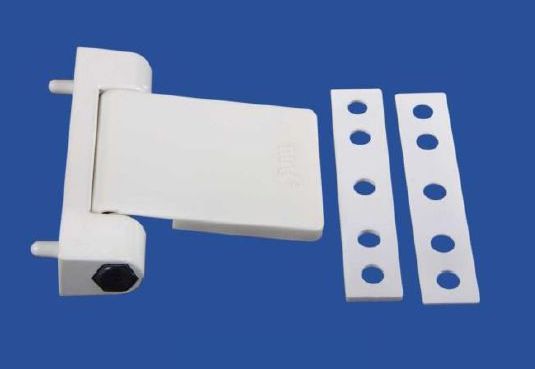 | UPVC Window & Door Hardware UPVC Dooe Hardware View product → |
Install, adjust and commission every locking point
A stiff handle is an installation fault until proven otherwise. Complete the multipoint lock installation with the sash supported, the frame square and the perimeter clearance consistent; forcing the handle can damage the gearbox without correcting poor locking-point alignment.
1. Fit the gearbox, rods, corner drives and lock strip to the specified faceplate position. Secure the keeps with the prescribed screws into reinforcement, not only into a thin outer wall.
2. Hang the sash and check that it does not drop onto the threshold or scrape the frame. Adjust hinges and the sash lifter before changing the keeps.
3. Close the sash without turning the handle. Check the gasket compression around the full perimeter; a crushed gasket or a visible gap indicates incorrect sash position or seal pressure.
4. Perform window keep adjustment one keep at a time. Each cam, hook or bolt must enter its keep centrally, with no contact against the keep edge. Confirm every point engages before the handle reaches its final position.
5. Cycle the handle slowly through locked, closed and open positions. Stop if it binds; never use pliers or extra force.
6. Insert and turn the cylinder only with the sash fully closed. Confirm the key operates smoothly, the cylinder cannot be turned while the handle is in the wrong position, and the key withdraws in the intended position.
For tilt-and-turn windows, finish with tilt-and-turn adjustment: test the tilt restrictor, opening limiter and anti-mishandling device separately, then repeat the full locking cycle. Record the final settings and replace damaged keeps or fasteners before handover.
Frequently asked questions
How does a multipoint window lock secure the sash?
One handle turns a central gearbox that drives rods, cams, bolts or hooks into keeps at several points around the frame.
What should you match before ordering a replacement lock?
Match the mechanism to the window material, profile, sash dimensions, backset, spindle size, locking-point layout and keep positions.
What measurements should you take from an existing multipoint lock?
Record the faceplate length and width, backset, spindle height, gearbox dimensions, rod lengths, locking-point spacing and handle positions.
What should a supplier’s hardware specification include?
Request dimensions, compatible profiles, locking-point details, load ratings, corrosion protection, operating-cycle information and installation requirements.
How do you commission a multipoint window lock after installation?
Align the sash, adjust the keeps and cams, check handle travel, test each locking point and confirm smooth operation without excessive force.